
Product Review
Monoprice Monolith 43862
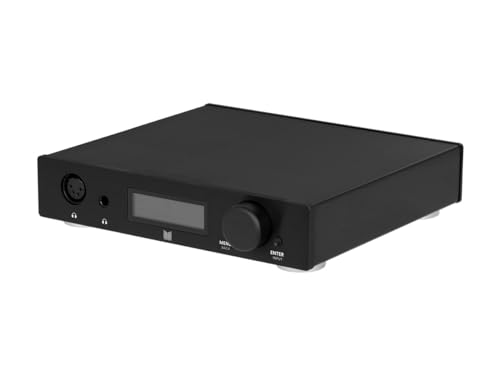
Desktop DAC/amplifier with THX AAA technology and ESS SABRE DAC, offering solid performance but facing significant cost-performance and support challenges.
Overview
The Monoprice Monolith Desktop Balanced Headphone Amplifier and ESS SABRE DAC (Model 43862) represents the current iteration of Monoprice’s THX-certified desktop audio solution. This model replaced the previous AKM-based version (model 24459) when Monoprice switched to ESS technology following AKM’s factory incident. This desktop DAC/amplifier combination features dual THX AAA 788 amplifier modules, an ESS SABRE 9038Q2M DAC, MQA compatibility, and Dirac Virtuo spatial processing. The unit provides both balanced XLR and single-ended headphone outputs with comprehensive connectivity options including USB, optical, coaxial, XLR, and RCA inputs. At 599.99 USD, it positions itself as a mid-range desktop audio solution targeting audiophiles seeking THX-certified amplification with modern digital processing features.
Scientific Validity
\[\Large \text{0.6}\]Third-party measurements from Audio Science Review provide credible performance data for evaluation. The DAC section achieves a SINAD of 107 dB with dynamic range of approximately 105 dB, meeting transparent level thresholds [1]. Second harmonic distortion measures -120 dB, significantly exceeding transparent level requirements. Total harmonic distortion specification of <0.0005% and crosstalk <100 dB both surpass transparent level criteria. However, ASR measurements identified notable limitations: higher noise levels compared to reference amplifiers, signal-to-noise ratio measurements falling short of expectations, and noise floor potentially audible with very sensitive IEMs, particularly at 50 millivolt output levels. Output impedance measures 1.3 ohms, which is acceptable for most headphone applications. Power output delivers 1 watt into 32 ohms single-ended and 3.12 watts balanced, providing adequate drive capability for most headphones. While core distortion and dynamic range measurements demonstrate solid performance, the documented noise issues prevent achieving transparent level evaluation.
Technology Level
\[\Large \text{0.7}\]The Monolith 43862 incorporates established audio technologies with contemporary implementation. THX AAA 788 amplifier modules utilize patented feed-forward error correction topology that nulls conventional distortion mechanisms, representing technology widely adopted across the industry due to its effectiveness. The ESS SABRE 9038Q2M DAC provides 32-bit processing with up to 128 dB dynamic range specification and THD+N of -120 dB. Modern digital processing includes Dirac Virtuo spatial enhancement and MQA hardware decoding, demonstrating integration of current audio technologies. The device supports DSD64/128 and PCM up to 32-bit/768kHz, covering contemporary high-resolution audio formats. Parametric EQ functionality adds user customization capabilities. Technology implementation reflects appropriate adoption of proven, industry-recognized solutions rather than cutting-edge innovation, utilizing existing proven modules from established suppliers.
Cost-Performance
\[\Large \text{0.3}\]Current market pricing shows the Monolith 43862 at 599.99 USD. Comparison analysis identifies the FiiO K7 at 199 USD as providing equivalent-or-better core functionality [3]. The K7 features dual AK4493SEQ DACs and dual THX AAA 788+ amplifiers with 2000mW output power at 32 ohms balanced, exceeding the Monolith’s 1360mW single-ended output. Both units provide balanced headphone outputs and comprehensive input options. While the Monolith includes MQA compatibility and Dirac Virtuo processing, these represent additional features rather than essential functionality differences. Cost-performance calculation: 199 USD ÷ 599.99 USD = 0.33, rounded to 0.3. The significant price differential demonstrates limited cost-performance value when equivalent core functionality and superior power output are available at substantially lower cost.
Reliability & Support
\[\Large \text{0.2}\]Monoprice provides standard one-year warranty coverage, below the typical two-year industry average. Customer service experiences demonstrate significant issues, with multiple reports describing support as inadequate and unresponsive. Documented problems include delayed shipping, poor communication, and inadequate warranty claim handling. Firmware support shows inconsistencies, with reports of version confusion between v1.03 and v1.04, and inadequate technical support documentation. Early firmware issues were reported with initial shipments. The 30-day return policy requires unopened packaging, creating restrictive return conditions. Multiple customer reports indicate Monoprice support becoming unresponsive after initial contact attempts, with some customers reporting no response after sending approximately ten support emails. These support infrastructure limitations significantly impact long-term ownership experience and product reliability perception.
Rationality of Design Philosophy
\[\Large \text{0.7}\]Monoprice demonstrates measurement-focused approach to audio product development, providing comprehensive specifications and downloadable measurement files from THX certification testing. The company emphasizes transparency in performance disclosure, publishing detailed specifications with all channels driven across the full frequency band, exceeding typical industry practice. Design implementation utilizes modern digital signal processing through Dirac Virtuo and established amplifier technology through THX AAA modules, representing rational technology adoption. Partnership with established audio technology providers (THX, ESS Technology) demonstrates focus on proven solutions rather than proprietary approaches of uncertain value. Company statements emphasize objective measurement and “textbook performance” goals, aligning with scientific audio design principles. Technology choices prioritize measurable performance improvements over subjective enhancement claims, supporting rational engineering approach to audio product development.
Advice
For potential purchasers seeking desktop DAC/amplifier solutions, the Monolith 43862 provides solid measured performance with established THX AAA amplification technology. However, significant cost-performance disadvantages and documented support issues create substantial purchasing concerns. Alternative products like the FiiO K7 offer equivalent core functionality at one-third the price with superior power output capabilities. The Monolith’s additional features (MQA decoding, Dirac Virtuo processing) may justify premium pricing only for users specifically requiring these technologies. Prospective buyers should carefully evaluate whether the price premium provides meaningful value given documented customer service limitations and availability of functionally equivalent alternatives. Those prioritizing maximum cost-effectiveness should consider lower-priced options with equivalent or superior measured performance.
References
[1] Audio Science Review - Review and Measurements of Monoprice THX Desktop DAC & Amp, https://www.audiosciencereview.com/forum/index.php?threads/review-and-measurements-of-monoprice-thx-desktop-dac-amp.7483/, accessed 2025-10-30
[2] Monoprice Official Product Page - Monolith Desktop Balanced Headphone Amplifier and ESS SABRE DAC, https://www.monoprice.com/product?p_id=43862, accessed 2025-10-30
[3] FiiO K7 Current Market Price - Amazon.com, https://www.amazon.com/Balanced-Headphone-Amplifier-AK4493S-PCM384kHz/dp/B0C7Q297GQ, accessed 2025-10-30
[4] THX AAA Technology Overview, https://www.thx.com/aaa/, accessed 2025-10-30
(2025.10.31)
External Search
Check additional information and availability outside this site.