
Product Review
Kinera Celest Rue
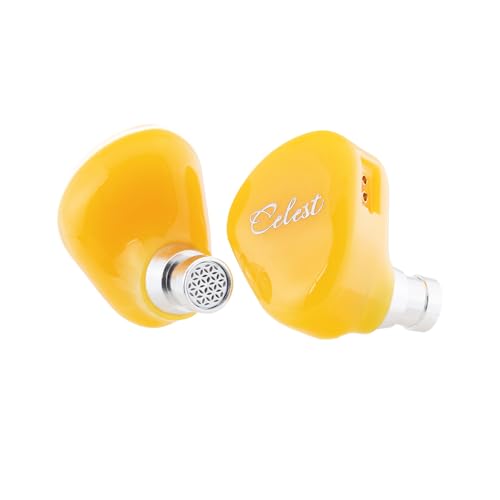
Ultra-compact entry-level IEM at 14.99 USD. No third-party measurements available; technology is entirely commodity-level with no proprietary differentiation. No confirmed cheaper equivalent exists among measured alternatives, yielding CP=1.0. One-year warranty. Design philosophy prioritizes aesthetics over measurable audio performance.
Overview
The Kinera Celest Rue is an ultra-compact wired in-ear monitor from Kinera’s Celest sub-brand, introduced at CanJam SoCal 2024 [1]. Celest was established in 2021 by Yutai Acoustics — the parent company of the Kinera, Celest, and QOA brands — targeting entry-level enthusiast users. Priced at approximately 14.99 USD (without microphone), the Rue features a 6mm micro dynamic driver housed in a 3D-printed resin shell weighing approximately 3.2g. The product is also available on Amazon under the QOA brand name. Four color variants are offered, each optionally with an inline microphone and volume control.
Scientific Validity
\[\Large \text{0.5}\]Manufacturer specifications indicate a frequency response of 20Hz–20kHz; no deviation tolerance is stated, and no independent third-party measurements are available for verification. Scientific Validity cannot be evaluated due to insufficient data.
Technology Level
\[\Large \text{0.2}\]The Celest Rue is an in-house design by Celest/YuTai Acoustics, providing one positive factor. However, all constituent technologies are commodity-level with no proprietary differentiation. The 6mm titanium-coated composite diaphragm dynamic driver has been standard in budget IEMs since the mid-2010s; 3D-printed resin shells became universal across all price tiers by approximately 2020; 0.78mm 2-pin detachable cables and OFC silver-plated wire are broadly standard at this segment. The parent company holds a broader patent portfolio covering BA drivers, dynamic drivers, and bone conduction, but none of these apply to the Rue, which uses exclusively commodity components sourced from established supply chains. The design is directly replicable by any budget IEM manufacturer without meaningful R&D investment or licensing. The product operates as a purely passive analog device with no digital processing, DSP, software, or active electronics of any kind. Features described in marketing materials as differentiated — “acoustically engineered aluminum alloy nozzle,” “medical-grade resin,” “silver-plated OFC” — represent standard commodity components presented with elevated language, offering no measurable technical differentiation. No element of this design creates a competitive advantage that would require significant time for competitors to match.
Cost-Performance
\[\Large \text{1.0}\]This site evaluates based solely on functionality and measured performance values, without considering driver types or configurations.
The Kinera Celest Rue is priced at 14.99 USD (without microphone) as of 2026-05-18. User-facing functions evaluated: wired analog output via 3.5mm single-ended connector; fully passive operation with no ANC, DSP, EQ, or wireless capability.
The cheapest confirmed currently available equivalent is the Tanchjim Zero at 15.00 USD [3], which has published third-party frequency response measurements available from crinacle [4] — marginally more expensive than the Celest Rue. The Moondrop Quarks (3.5mm analog, without microphone) carries an MSRP of 12.99 USD with published third-party frequency response and distortion measurements from multiple sources, but is currently sold out at its MSRP price with no confirmed restock; the only confirmed in-stock price as of this review is 15.99 USD. If the Moondrop Quarks becomes purchasable at its MSRP, the comparison would favor it as the cheaper confirmed equivalent and CP would decrease to 0.9; this should be revisited when current availability at 12.99–13.00 USD is confirmed.
As no confirmed cheaper equivalent-or-better product is available at current market prices, CP = 1.0. Note that this comparison is provisional throughout: the Celest Rue has no published third-party measurements, so performance equivalence rests on category parity — both candidates are passive wired 3.5mm IEMs without ANC or DSP. Results should be revised when independent measurement data becomes available.
Reliability & Support
\[\Large \text{0.6}\]Kinera provides a 1-year warranty on IEM bodies (cables receive 3 months only), covering defects in materials and workmanship with repair or replacement at no charge excluding shipping [2]. This warranty period is below the 2-year industry average, which applies a negative adjustment. Offsetting this, the Rue’s single passive dynamic driver construction contains no active electronics, making it inherently resistant to the component failures associated with more complex devices — a positive structural factor. Kinera Audio provides manufacturer-direct global warranty support with centralized claims handling for internationally shipped units, adding a positive adjustment. No statistical failure rate data (RMA ratios, MTBF, or recalls) is available; failure performance is treated as unknown. Out-of-warranty repair options and long-term parts availability beyond the warranty period are not documented. Firmware evaluation does not apply to this passive wired device.
Rationality of Design Philosophy
\[\Large \text{0.2}\]The Celest Rue’s development approach is oriented primarily toward aesthetic differentiation and market accessibility rather than measurable audio performance. The manufacturer’s marketing materials devote substantial space to cultural branding — mythology-inspired naming, four color variants, calligraphic logo design — with all sound quality descriptors (“powerful bass,” “balanced tonality,” “HIFI”) consisting of unsubstantiated subjective language [1]. No measured frequency response curves, THD figures, or any performance documentation is published or linked from official channels. This absence of measurement-focused development represents a negative factor. Cost allocation is weighted toward aesthetics rather than audio engineering, constituting a further negative factor. The silver-plated OFC cable is presented with premium framing despite the absence of documented audible benefit over standard OFC wire, representing an implied performance claim without scientific basis. The overall design approach is straightforwardly conservative: a commodity single-driver configuration that was already well-established in the market before the product’s 2024 release, with no novel acoustic engineering, no DSP, and no technical differentiation. While 3D-printed shell manufacturing is an appropriate modern production method and the product avoids scientifically unsound choices such as tubes, these represent minimum-baseline decisions rather than positive differentiators.
Advice
The Kinera Celest Rue offers a genuinely compact, lightweight form factor — at approximately 3.2g per unit, it is among the smallest IEMs in its segment — which may be attractive for users whose primary requirement is ergonomic portability. The passive single-driver construction has no active electronics to fail, and the detachable 0.78mm 2-pin cable system allows for cable replacement.
Prospective purchasers should be aware of key limitations. No independent measurement data exists for this product, leaving actual frequency response accuracy and distortion performance unverified against objective benchmarks. The 1-year warranty is below typical industry duration. The closest confirmed available equivalent-or-better product, the Tanchjim Zero at 15.00 USD [3], has published third-party frequency response measurements [4], providing objective performance transparency that the Celest Rue currently lacks. If confirmed available at its MSRP, the Moondrop Quarks would represent a documented measured alternative at a lower price point. Users requiring EQ, ANC, or wireless connectivity will need to consider different products, as the Celest Rue provides none of these functions.
References
[1] Head-Fi — Celest Rue Showcase & Reviews - https://www.head-fi.org/showcase/celest-rue.27897/ - accessed 2026-05-18 (official Kinera product page was inaccessible at review time; product details corroborated via this source)
[2] Kinera Audio — Warranty & Refund Policy - https://kineraaudio.com/pages/warranty - accessed 2026-05-18
[3] Amazon.com — Tanchjim Zero (ASIN B0B8HYJKKD) - https://www.amazon.com/TANCHJIM-Zero-Dynamic-Earphone-Architecture/dp/B0B8HYJKKD - accessed 2026-05-18
[4] crinacle / In-Ear Fidelity — Tanchjim Zero IEM Measurements - https://crinacle.com/graphs/iems/tanchjim-zero/ - accessed 2026-05-18 (FR vs Harman IE 2019 v2 target; IEC-60318-4 coupler measurement rig)
(2026.5.21)
External Search
Check additional information and availability outside this site.