
Product Review
TC Electronic LEVEL PILOT X
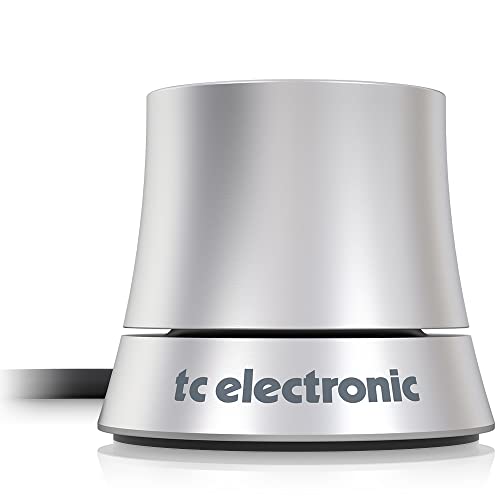
A passive balanced XLR volume controller for studio monitors. No audio performance specifications are available for objective evaluation, the underlying technology is fully mature, and cheaper equivalent-or-better passive monitor controllers are available.
Overview
TC Electronic, founded in Denmark in 1976 and now part of the Music Tribe group, built its reputation on digital signal processing equipment. The LEVEL PILOT X is a passive analog stereo volume controller designed for use between an audio source and active studio monitors. Priced at 50 USD, it features two balanced XLR inputs and two balanced XLR outputs, a Bourns dual-gang potentiometer for level attenuation, an aluminum enclosure with a rubberized base, and requires no external power. A 1.5m XLR extension cable is included [1].
Scientific Validity
\[\Large \text{0.5}\]No third-party measurements or manufacturer audio performance specifications are available for this passive attenuator. As a fully passive device containing no active electronics, objective evaluation from measured data cannot be performed.
Technology Level
\[\Large \text{0.3}\]The LEVEL PILOT X consists of a Bourns stereo potentiometer, balanced XLR connectors, and an aluminum housing — a configuration representing decades-old, fully mature technology [1]. The product appears to be an in-house TC Electronic design with no identified OEM source. No proprietary patents, technical papers, or novel circuit implementations have been identified. Passive balanced attenuator topology has been the industry standard in professional audio since the mid-20th century, and the complete design can be replicated by any manufacturer using standard commercial components with no specialized expertise. The product contains no digital processing, software integration, or firmware of any kind.
Cost-Performance
\[\Large \text{0.6}\]The current market price of the TC Electronic LEVEL PILOT X is 50 USD [1].
The Behringer Monitor1 at 32 USD is the cheapest confirmed equivalent-or-better passive monitor controller found [4]. It provides balanced XLR/TRS combo stereo inputs, balanced XLR stereo outputs, passive operation without power, rotary level control, and adds mute and mono functions that the LEVEL PILOT X lacks. Neither product publishes audio performance specifications or independent third-party measurements, so this comparison is provisional and based on confirmed user-facing functions.
CP = 32 USD ÷ 50 USD = 0.64
Reliability & Support
\[\Large \text{0.6}\]The standard warranty is 1 year, extendable to 3 years at no additional cost upon registration with Music Tribe within 90 days of purchase [2]. Music Tribe operates a global support infrastructure for TC Electronic products. The device’s construction is minimal: a single potentiometer in an aluminum enclosure with no active components, power supply, or digital circuitry. However, the unsealed potentiometer design has a documented and recurring tendency to develop scratching and static noise after approximately one to two years of daily use. A dedicated repair guide exists for this specific issue [3], and consistent reports appear across multiple independent user communities. Application of electrical contact cleaner provides a temporary fix, with repeat treatment typically required annually. This constitutes a known degradation pattern in the product’s core mechanical component.
Rationality of Design Philosophy
\[\Large \text{0.6}\]The LEVEL PILOT X takes a minimalist, cost-directed approach: expenditure goes toward the potentiometer, XLR connectors, and aluminum enclosure — all components directly relevant to the product’s purpose. The evolution from the original LEVEL PILOT to the LEVEL PILOT X introduced balanced XLR connectivity in place of unbalanced connections, representing a genuine functional improvement in common-mode noise rejection for studio monitor applications. Both of these design aspects are rational. However, the central marketing claim — that controlling volume after digital-to-analog conversion preserves audio resolution in a way that software or interface-level control cannot — is not supported by measurement evidence in properly designed modern digital audio systems operating at normal attenuation levels. This constitutes a claim of audible benefit for a difference that cannot be confirmed by measurement.
Advice
The LEVEL PILOT X provides a hardware volume knob for active studio monitors with XLR inputs, fully independent of any software or operating system. For users who specifically require a no-power, hardware-only volume control with balanced XLR connectivity, it fulfills its stated function. However, the Behringer Monitor1 provides the same core passive balanced monitor-control function at 32 USD and adds mute and mono controls, making the LEVEL PILOT X less attractive on pure function-per-price grounds. Prospective buyers should also weigh the documented potentiometer wear issue carefully: static and scratching noise development within one to two years of regular use is consistently reported, and periodic maintenance with contact cleaner is the established mitigation rather than a permanent fix.
References
[1] Thomann - TC Electronic Level Pilot X - https://www.thomannmusic.com/tc_electronic_level_pilot.htm - accessed 2026-06-07; price: 50 USD
[2] Sweetwater - TC Electronic Warranty Registration Guide - https://www.sweetwater.com/sweetcare/articles/tc-electronic-warranty-registration/ - accessed 2026-05-30
[3] iFixit - How to fix TC Electronic Level Pilot static noise (repair guide) - https://www.ifixit.com/Guide/How+to+fix+TC+Electronic+Level+Pilot+static+noise/28905 - accessed 2026-05-30
[4] Thomann - Behringer Monitor1 - https://www.thomannmusic.com/behringer_monitor1.htm - accessed 2026-06-07; price: 32 USD; passive monitor controller with XLR/TRS combo stereo input, XLR stereo output, mute, and mono summing
(2026.6.6)
External Search
Check additional information and availability outside this site.